
Last Updated on March 23, 2026 by Dividend Winner
The escalating Iran conflict has injected fresh volatility into global markets, pushing oil prices sharply higher and sending major indices into rapid swings. For Canadian investors, especially those focused on dividends, these geopolitical shocks matter.
Canada’s market is uniquely sensitive to global conflict because of its heavy exposure to energy, materials, and financials. As tensions rise, the TSX is reacting quickly, creating both risks and opportunities for long‑term income investors.
This article breaks down how the conflict is affecting oil prices, sector performance, and dividend stability across the TSX.
Why Geopolitical Shocks Hit Canada Differently
Canada’s economy and stock market are deeply tied to global commodity flows. When conflict disrupts supply chains or threatens major shipping routes, Canadian companies often feel the impact faster than other developed markets.
Key reasons include:
- Canada is a major exporter of oil and natural gas.
- The TSX is heavily weighted toward energy and materials.
- Pipeline and midstream companies benefit from stable, fee‑based revenue even during volatility.
- Canada becomes a reliable alternative supplier when Middle Eastern output is threatened.
As the Iran conflict disrupts shipping through the Strait of Hormuz, Canadian producers are positioned to capture elevated demand and stronger pricing.

These dynamics set the stage for how global oil markets are reacting in 2026.
How the Iran Conflict Is Influencing Global Oil Markets
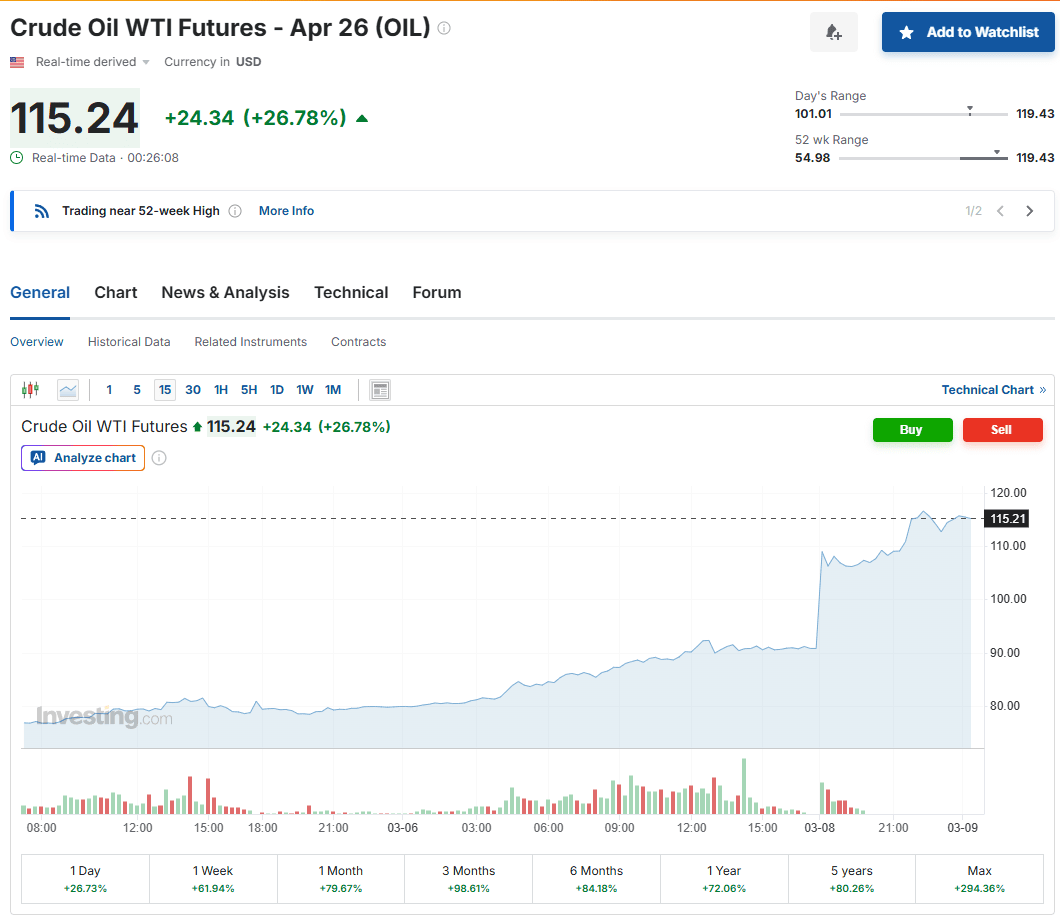
The Iran conflict has injected a new layer of uncertainty into global energy markets, pushing oil prices higher as traders anticipate potential supply disruptions. Even the possibility of reduced exports from the Middle East is enough to tighten sentiment, since the region remains one of the world’s most important energy corridors. This fear‑driven premium is a major reason crude prices have climbed sharply in early 2026.
Beyond immediate supply concerns, the conflict has also increased volatility. Markets are reacting quickly to headlines, diplomatic statements, and military developments, creating rapid swings in intraday pricing. For long‑term investors, this volatility can feel chaotic, but it reflects the market’s attempt to price in a wide range of possible outcomes.
At the same time, global demand remains relatively stable, which amplifies the impact of any perceived supply risk. With inventories not significantly elevated and OPEC+ maintaining disciplined production, even small disruptions can have outsized effects on pricing. This combination of steady demand and fragile supply dynamics is what makes the current environment particularly sensitive to geopolitical shocks.
How Rising Oil Prices Affect Canadian Dividend Stocks
Rising oil prices generally strengthen Canadian energy companies, which often leads to higher cash flows and more stable dividend payouts. Pipeline and midstream companies also tend to benefit because higher production volumes increase throughput and fee revenue. For dividend investors, this environment can create both short‑term volatility and long‑term income opportunities.
Sector‑by‑Sector Impact on Canadian Dividend Stocks
The Iran conflict doesn’t affect all Canadian dividend sectors equally. Some industries benefit directly from higher oil prices, while others face increased volatility or shifting investor sentiment. Understanding these differences helps dividend investors position their portfolios more strategically in 2026.
Here’s how each major dividend sector is being affected:
Energy Producers (CNQ, Suncor, Imperial Oil)
Higher oil prices generally boost cash flows for Canadian energy producers, supporting stronger dividends and potential special payouts. These companies tend to outperform during geopolitical tensions, but they also experience sharper price swings when headlines shift.
Pipelines and Midstream (Enbridge, TC Energy, Pembina)
Pipeline companies often benefit indirectly from rising oil prices. Higher production levels increase throughput, which supports fee‑based revenue. Their long‑term contracts make dividends more stable than those of producers, though regulatory and political risks remain.
Utilities (Fortis, Hydro One)
Utilities are not directly tied to oil markets, but they can experience short‑term volatility as investors rotate between defensive and cyclical sectors. Their dividends remain among the most stable in Canada, making them a ballast during geopolitical uncertainty.
Telecoms (BCE, Telus, Rogers)
Telecoms typically act as defensive holdings. They may see temporary weakness if investors chase energy stocks, but their long‑term dividend outlook remains steady. Rising interest rates pose a bigger challenge than geopolitical events.
Financials (Big Six Banks)
Canadian banks are indirectly affected through market volatility and shifting credit conditions. While they are not tied to oil prices, energy‑heavy regions like Alberta can influence loan performance. Overall, bank dividends remain resilient but may face short‑term pressure.
Materials (Nutrien, Teck Resources, First Quantum)
The Materials sector reacts differently to geopolitical shocks depending on the specific commodity. Companies tied to fertilizers, precious metals, and mining can experience both tailwinds and headwinds as global supply chains shift. Higher energy prices increase production and transportation costs, which can pressure margins, but they also tend to support stronger pricing for metals and minerals used in infrastructure, manufacturing, and global trade.
Fertilizer producers like Nutrien may benefit if geopolitical tensions disrupt global crop production or supply routes, pushing nutrient prices higher. Meanwhile, miners such as Teck Resources or First Quantum can see increased demand for copper, zinc, and other industrial metals if governments accelerate infrastructure spending in response to economic uncertainty. Dividend stability in this sector varies widely, so investors should focus on companies with strong balance sheets and disciplined capital allocation.
Together, these sector dynamics show why diversification is essential during geopolitical shocks.
How I’m Positioning My Own Portfolio
As a Canadian dividend investor, geopolitical events like the Iran conflict don’t change my long‑term strategy, but they do influence how I think about weighting. When oil spikes, I don’t chase momentum, but I do review my exposure to names like CNQ and ENB to make sure I’m positioned for both upside and downside. I’m not increasing my weighting in CNQ, but I’m comfortable holding my existing position.
I also lean on utilities and telecoms during periods like this. Fortis and Telus aren’t exciting, but they stabilize the portfolio when headlines get chaotic. My goal is always the same: predictable income, low drama, and long‑term compounding.
This conflict reminds me of 2020–2022, the investors who stayed calm and focused on fundamentals came out stronger.
Risks Dividend Investors Should Consider
Even though higher oil prices can support stronger cash flows for Canadian energy companies, the Iran conflict also introduces meaningful risks that dividend investors need to keep in mind. Geopolitical shocks tend to increase volatility across the TSX, and income‑focused portfolios are not immune to sudden swings in commodity prices or investor sentiment.
One key risk is short‑term price instability. Energy stocks may surge on supply fears, but they can just as quickly pull back if diplomatic conditions shift or if global demand weakens. This can create uncomfortable drawdowns for investors who rely on stable portfolio values.
Another concern is dividend sustainability during prolonged uncertainty. While Canadian energy companies have improved their balance sheets since 2020, a sharp drop in oil prices, triggered by a ceasefire, unexpected production increases, or global recession, could pressure payout ratios. Pipeline companies are generally more insulated, but they are not completely risk‑free if throughput declines.
Finally, broader market sentiment can spill over into sectors unrelated to energy. Utilities, telecoms, and financials may experience temporary weakness as investors rotate into or out of defensive positions. For dividend investors, this means staying patient and avoiding emotional decisions during geopolitical headlines.
These risks don’t undermine the long‑term case for dividends, but they do require patience and discipline.
What This Means for Canadian Dividend Investors in 2026
For Canadian dividend investors, the Iran conflict is a reminder that global events can reshape income portfolios even when the companies themselves remain fundamentally strong. Higher oil prices may support stronger dividends from energy producers and pipelines, but the surrounding volatility requires a steady, long‑term mindset.
The most important takeaway is that dividend stability in Canada remains resilient, even during geopolitical shocks. Energy companies have spent the last several years strengthening their balance sheets, reducing debt, and improving payout ratios. Pipelines continue to benefit from long‑term contracts that are less sensitive to short‑term price swings. Utilities and telecoms, while not directly tied to oil markets, often act as stabilizers during periods of uncertainty.
At the same time, investors should expect short‑term fluctuations in portfolio value as markets react to headlines. These swings are normal and often create opportunities to add to high‑quality dividend positions at more attractive valuations. The key is to stay focused on fundamentals rather than day‑to‑day market noise.
Ultimately, the Iran conflict highlights the importance of diversification within a dividend portfolio. A mix of energy, pipelines, utilities, telecoms, and financials helps ensure that no single geopolitical event can derail long‑term income goals.
Conclusion
The Iran conflict is reshaping global markets, but for Canadian dividend investors, it’s not just a threat, it’s an opportunity to reassess and strengthen portfolios.
Canada’s energy sector is uniquely positioned to benefit from supply disruptions, while defensive dividend sectors offer stability amid uncertainty. By focusing on quality, diversification, and long‑term fundamentals, investors can navigate this volatile period with confidence.
Key Takeaway

The Iran conflict is pushing oil prices higher, which strengthens Canadian energy dividends but increases volatility. Dividend investors should watch energy, pipelines, and utilities closely in 2026.
Ready to grow your money the smart way?
Don’t miss my updated guide: How to Build a $100K Dividend Portfolio in Canada